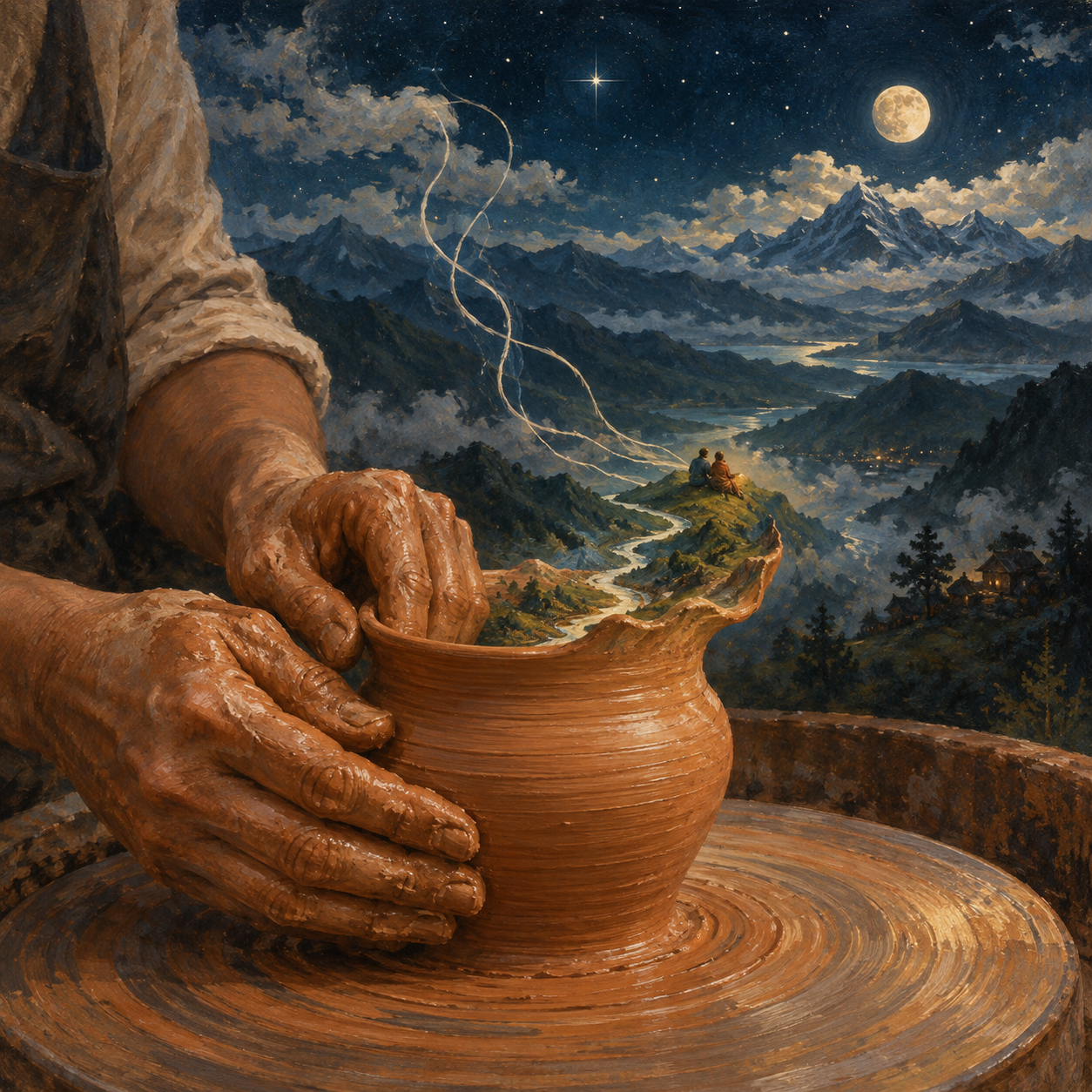
WORLD IS ONE
Meaning reference for the multilingual adaptations
Original poem by Ahimanikya Satapathy. This document is a translation aid, not lyrics to paste into Suno.
Original Odia wording supplied by the author
ମୋତେ ସପ୍ନ ଦେଖିବାକୁ ମନା ନାହିଁ ମନା ନାହିଁ ମଝି ରାସ୍ତାରେ ହଜି ଜିବାକୁ ଧୃବତାରା ଖୋଜିଦେବ ରାସ୍ତା ।
ସାଉଁଟି ସାଉଁଟି ଜାବୁଡି ଧରିଛି ସଂସାରକୁ ଜୋଡି ଦେବାର ଆଶାରେ, ସଜେଇ ଦେବାର ଆଶାରେ ।
କୁଂଭକାର ମୁଁ, ଗଠିଦେବା ସିଖିଛି ରଂଗେଈ ଦେଈ, ତୁମ ମୁଖରେ ହସ ବୁଣିବା ସିଖିଛି ।
ଆସ ପାହାଡ ଚଢିବା ଆସ ଜନ୍ହ ଦେଖିବା ବାଦଲ ସାଂଗେ କାଂଧ ମିଳେଈ ଝଡିବାର ମଂତ୍ର ସିଖିବା ।
ମୋତେ ସପ୍ନ ଦେଖିବାକୁ ମନା ନାହିଁ । ମନା ନାହିଁ ଗୁଂଥିଦେବାକୁ ତୁମ ସପ୍ନକୁ ମୋ ସପ୍ନରେ ।
Intended meaning and essential images
- The speaker is free to dream and free to become lost along the way. The North Star will show the way onward.
- Gathering the world, piece by piece, the speaker holds it close, hoping to join or mend it and make it beautiful. This is not a gathering of people or a social meeting.
- The speaker is a potter, a maker who has learned to give form and colour and to sow a smile on the beloved's face. A smile blooming is an acceptable lyrical adaptation of the sowing image.
- The speaker invites the beloved to climb mountains and look at the moon. Together, shoulder to shoulder with the clouds, they learn the mantra of falling or shedding as rain. The rain image interprets the original in its cloud context; retain its feeling of release and generosity.
- The final freedom is to weave the beloved's dreams into the speaker's dreams.
Musical structure and pauses
Intro: the opening stanza.
Verse 1: gathering and embracing the world. Keep a distinct breath between the repeated gathering phrases.
Verse 2: the potter. Keep a full blank line after “I am a potter.” The instruments should sustain beneath this pause.
Chorus: repeat the opening stanza.
Bridge: mountains, moon, clouds, rain.
Final Chorus: the last stanza about dreaming and weaving dreams together.
Soft Outro: repeat the final weaving image.
Kashmiri reference source
The experimental Kashmiri text was generated in Microsoft Bing Translator from these simplified English sentences, then arranged into song sections. The simpler wording was used to obtain a reference, not to replace the full poetic meaning above. The reference needs native-speaker revision; it does not yet preserve every image adequately.
I am allowed to dream. I am allowed to lose my way on the road. The Pole Star will guide me.
I gather it, I gather it. I have embraced the world. I hope to join it together. I hope to make it beautiful.
I am a potter.
I have learned to shape clay. I have learned to add colours. I have learned to make you smile.
Come, let us climb a mountain. Come, let us look at the moon. Let us stand shoulder to shoulder with the clouds. Let us learn how to fall like rain.
I am allowed to dream. I am allowed to weave your dreams into my dreams.
Review priorities
For every language, check natural phrasing, meaning, the potter identity, the repeated opening, and the final dream-weaving image. In a generated recording, also check missed words, extra words, pronunciation, stress, and the requested pauses.
For Konkani, confirm the chosen Devanagari wording, dialect consistency, verb forms, and the gathering and weaving expressions.
For Kashmiri, a native poetic adaptation is still needed. In particular, replace the English Pole Star borrowing with an appropriate expression; restore the world-embrace, smile-sowing, and rain-mantra images; check the native potter term and all grammatical forms. Machine translation and a successful Suno generation would not, by themselves, verify this text.