Bengali

স্বপ্ন দেখতে আমার মানা নেই

A poem by Ahimanikya Satapathy

ListenWatch
Share

Read

স্বপ্ন দেখতে আমার মানা নেই,
পথের মাঝে হারিয়ে যেতেও মানা নেই।
ধ্রুবতারা পথ দেখাবে।

কুড়িয়ে... কুড়িয়ে...
সংসারটাকে বুকে জড়িয়ে রেখেছি—
জুড়ে দেওয়ার আশায়,
সাজিয়ে দেওয়ার আশায়।

আমি এক কুমোর।

গড়ে তুলতে শিখেছি,
রঙে রাঙিয়ে,
তোমার মুখে হাসি ফোটাতে শিখেছি।

স্বপ্ন দেখতে আমার মানা নেই,
পথের মাঝে হারিয়ে যেতেও মানা নেই।
ধ্রুবতারা পথ দেখাবে।

এসো, পাহাড়ে উঠি।
এসো, চাঁদ দেখি।
মেঘের সঙ্গে কাঁধ মিলিয়ে,
বৃষ্টি হয়ে ঝরার মন্ত্র শিখি।

স্বপ্ন দেখতে আমার মানা নেই।
তোমার স্বপ্ন আমার স্বপ্নের সঙ্গে
বুনে দিতেও মানা নেই।

তোমার স্বপ্ন আমার স্বপ্নের সঙ্গে...
বুনে দিতেও মানা নেই।
Download poem & notes ↓

Another kind of poem

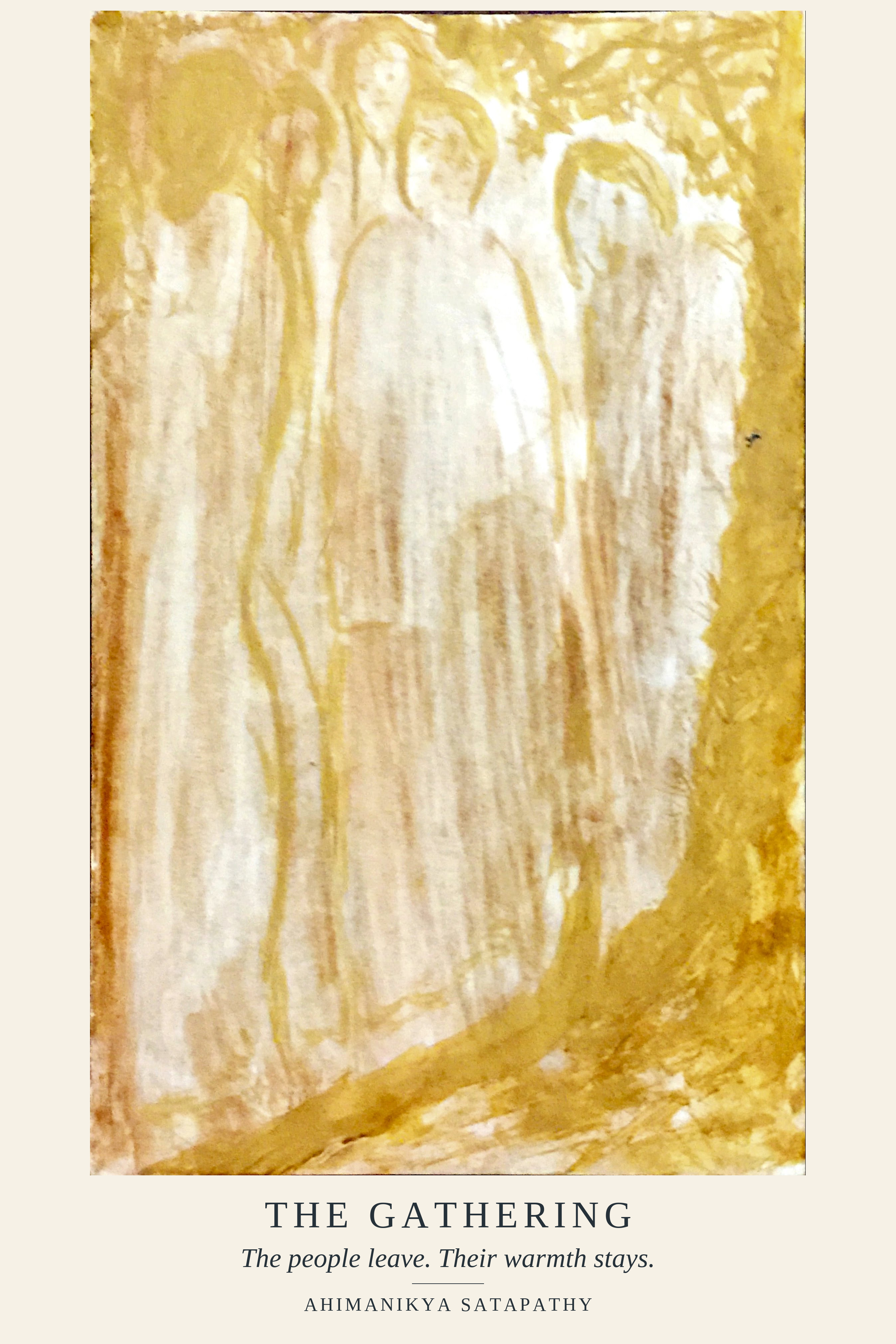
The Gathering, refined print of artwork by Ahimanikya Satapathy

The Gathering

The people leave. Their warmth stays.

Ahimanikya Satapathy
The Gathering

Art slideshow with this song

Lyrics with song sections

Why this version sounds this way

Adaptation · review welcome · Read the original poem ↗

Why this musical direction

Borrow the sense of a long breath travelling across space for the North Star and cloud images. Keep the lyric as a new Bengali poem-setting; it is not Rabindrasangeet or an inherited folk song.

The shared feeling is calm, soulful joy: affection, wonder and the freedom to dream. Local vocal phrasing and melody lead the arrangement. Rhythm and instrumentation can vary with the chosen setting while the pace remains unhurried.

Arrangement decisions and review

Status — musical intention with a listening reference. A recording is available above. These notes describe the intended choices; a prompt does not establish what was actually sung or played. Keep the author-selected take as the reference and identify any proposed change separately.

Published vocal choice — Solo. The selected recording and its matching video are presented as the primary solo version, following the author’s direction.

Future generations — solo by default. One lead keeps the poem’s first-person voice and long thoughts connected. Any second voice, shared refrain or harmony suggested in the arrangement notes is an optional variation to discuss with the author before generation; it is not required by the language. The author has requested soft-answer duet trials; those remain review candidates, not the default or a replacement for the published version.

What to validate. Use long, connected Bengali lines and gentle descending resolutions; keep the spacious delivery quietly happy. Check whether the cited context supports the chosen influence and whether the musical choices serve the poem. Distinguish a documented practice from our new arrangement. Suggest corrections with the local variety, a source or performance example, and a timestamp when reviewing audio.

The optional duet trial of 27 September retains bhatiyali-inspired space, long breath-connected lines, gently descending endings, dotara and airy flute. Soft female replies give the invitation an answering voice; close harmony at the end suggests two dreams woven together. This is a contemporary poetic choice, not a traditional duet requirement. These are new text-prompt candidates, not covers of the published recording. Before selecting an additional Duet version, check Bengali stresses and complete phrases, the male solo through the first chorus, the secondary female replies, and the gathering breath and potter pause. The original recording remains available.

Cultural grounding

Sahapedia’s discussion of northern Bengal’s folk songs distinguishes bhawaiya from the expansive river-song world of bhatiyali. These are particular traditions, not interchangeable names for Bengali music.

Musical reference: Sahapedia — Solitude, Love, Nature and Womanhood in Bhawaiya Songs.

The reference supports the context described above. The new melody, tempo and ensemble still need musician review.

Review these musical choices →

Musical direction & style prompt

Voice, rhythm and arrangement

Use long, connected Bengali lines and gentle descending resolutions; keep the spacious delivery quietly happy.

Dotara figures, airy flute, sparse hand percussion and an elastic lead melody. Allow gently descending line endings and more space between phrases than in Hindi’s regular geet pulse.

Use a warm youthful male lead. Choose the rhythm around the reviewed lyric; there is no collection-wide requirement for 6/8. Keep one answering instrument or voice prominent at a time, with percussion below the words.

Emotional shape

Begin with a suspended vocal line. A repeating dotara figure supports gathering. Let the bridge expand in breath length, then bring the last refrain close to spoken tenderness. Keep a distinct gathering breath and a fuller potter pause, with soft instruments sustaining underneath. Add warmth without accelerating or building a dramatic crescendo. End in peaceful, hopeful contentment.

Style prompt

Dreamy Bengali poetic folk ballad with bhatiyali-inspired spacious phrasing. Warm intimate male voice, natural Bengali diction, long breathing lines and gently descending endings. Dotara, airy bamboo flute and sparse soft hand percussion, an elastic relaxed pulse. Breath between কুড়িয়ে... কুড়িয়ে... and a full pause after আমি এক কুমোর. Keep instrumental notes floating beneath the silence. Gradually open from a solitary verse to a quietly hopeful refrain; broaden the mountain-and-cloud bridge, then return to a tender close voice for weaving dreams together. Use long, connected Bengali lines and gentle descending resolutions; keep the spacious delivery quietly happy. Warm youthful delivery; calm, soulful joy, affection and wonder. Keep the pace unhurried throughout; finish with peaceful hope. No mournful delivery, driving beat or dramatic crescendo.

Working settings and listening checks

Use the existing arranged lyric for comparison. Keep its words, section order and pauses intact; log any later wording changes separately.

Start with the shared generation baseline, then apply documented language or arrangement overrides. Preserve this language’s musical direction and listening checks. Explain each changed control, its musical reason and review status; record the actual settings with the take.

For the listening review:

  1. Ask a fluent speaker to read the opening, gathering line, potter declaration and longest phrase naturally. Compare that phrasing with the sung version.
  2. Check that the local vocal cadence and melodic treatment are audible, and that the regional character comes through beyond instrument names. Use long, connected Bengali lines and gentle descending resolutions; keep the spacious delivery quietly happy.
  3. Check the gathering breath and fuller potter pause. Listen for dropped syllables, added words, distorted pronunciation or an accompaniment that forces a sentence to hurry.
  4. Compare the opening, bridge and ending at similar playback volume. The arrangement may grow warmer, but should remain calm, soulful and quietly happy.

Keep the current translation review status until a fluent speaker and singer have reviewed the actual wording and take.

Translation & collaboration
QUICK REFERENCE

How to validate this translation

Use this checklist alongside the review status above. A fluent review of the text and a listening review are separate steps.

Keep the original Odia poem and meaning & poetic intent beside you.

  1. Compare the meaning. Paraphrase each stanza in plain English or Odia and compare it with the source. Preserve freedom to dream and lose the way, the North Star, gathering and embracing the world, the potter, sowing a smile, mountains and moon, clouds and rain, and weaving your dreams into mine. Flag omissions, additions or changed relationships.
  2. Read it aloud. Ask a fluent speaker of the intended dialect to check grammar, idioms, spelling, script and natural poetic phrasing. A literal word-for-word match is not the goal.
  3. Check cultural fit. Confirm that imagery, terms of affection and musical suggestions suit the chosen region and tradition. Explain any intentional adaptation without changing the poem’s tenderness or meaning.
  4. Check the sung version, if available. Listen against the exact lyrics for skipped or added words, pronunciation and unnatural word breaks. Keep a breath between the repeated gathering phrases and a fuller pause after “I am a potter.” Label extra repetitions as song arrangement.
  5. Leave a review others can use. Quote the line, suggest a replacement, give its literal meaning and explain why. Include your dialect, name to credit, the version reviewed and any unresolved doubts; add timestamps only for audio you actually heard.

AI suggestions and back-translation can help find questions; neither proves accuracy. Keep drafts marked for review until a fluent speaker has checked them and the author or a designated maintainer has accepted the changes. Note exactly what was reviewed.

Language-specific review

Preserved AI-assisted lyric draft. Have a fluent reader check idiom, grammatical agreement, natural poetic address and the dream-weaving image; then check the sung pronunciation separately.

Production baseline & local overrides

Intended settings for a future recording, not measured properties of the tracks above. Policy 2026-09-27-2.

ControlStarting value
Modelv6
ModeAdvanced
Weirdness30
Style Influence65
Max ModeOn
PersonalizeOff
VarietyNormal
DurationAuto
Vocal GenderUnselected; voice directed in the language prompt
Audio InfluenceNot applicable
Exclude StylesEDM, heavy dance beats, aggressive percussion, theatrical belting, excessive vocal runs, vocoder, chopped vocals

No adopted language control overrides. This language’s musical prompt and reasoning remain specific to its chosen setting.

How to adapt this baseline · Use the collection in your work