Filipino / Tagalog

Malaya Akong Mangarap

A poem by Ahimanikya Satapathy

ListenWatch
Share

Read

Malaya akong mangarap

Maaari ring maligaw
Sa gitna ng paglalakbay
Ang Tala sa Hilaga
Ang magtuturo ng daan

Tinitipon…
Tinitipon…
Yakap kong mahigpit ang mundo
Sa pag-asang pagdugtungin
Sa pag-asang pagandahin

Malaya akong mangarap
Kahit maligaw sa daan
May talang aakay sa akin
Malaya akong mangarap

Ako'y magpapalayok.

Natutuhan kong humubog
At magbigay ng kulay
Natutuhan kong magpunla
Ng ngiti sa iyong mukha

Halika, akyatin natin ang bundok
Halika, pagmasdan natin ang buwan
Makisabay sa mga ulap
Matuto tayong bumuhos
Gaya ng ulan

Malaya akong mangarap
Malaya kong maihahabi
Ang pangarap mo sa pangarap ko
Malaya akong mangarap

Ang pangarap mo…
Sa pangarap ko…
Dahan-dahan kong ihahabi
Download poem & notes ↓

Another kind of poem

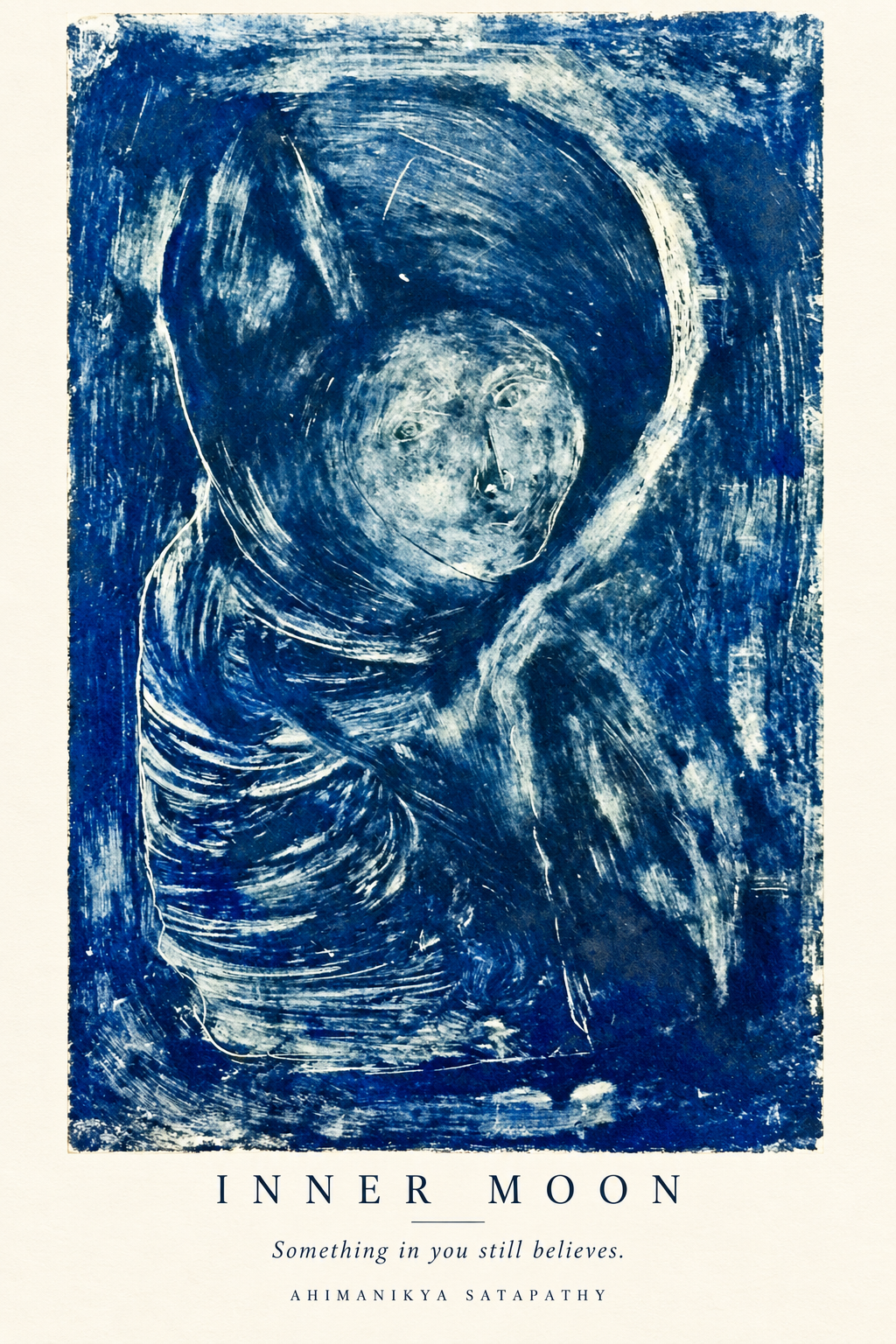
Inner Moon, refined print of artwork by Ahimanikya Satapathy

Inner Moon

Something in you still believes.

Ahimanikya Satapathy
Inner Moon

Art slideshow with this song

Lyrics with song sections

Why this version sounds this way

Adaptation · review welcome · Read the original poem ↗

Why this musical direction

The first-person promise and the invitation to weave dreams together suit an intimate delivery, with room for natural Tagalog phrase endings. Quiet joy is the intended feeling. The shared recording is the author's chosen starting point; its specific genre, instruments and vocal arrangement have not yet been documented through listening review. We are leaving those details open rather than assigning a tradition after the fact.

A Filipino / Tagalog singer can help identify the recording's actual phrasing and musical references, then explain which local approach best supports this lyric. The language name alone is not enough to choose one style for the Philippines.

Arrangement decisions and review

Vocal choice — solo baseline for new arrangements. Keep the existing author-selected recording as the reference. Its actual vocal format needs listening review; no duet has been selected here as the default.

What remains open. Document what is heard before attributing a style or tradition. A fluent singer should check word stress, complete phrases, the potter pause and the calm emotional flow, then identify any local musical influence with a reference. A second voice can be proposed with its own reason and reviewed separately.

Review these musical choices →

Musical direction & style prompt

Musical direction

The shared foundation is calm, soulful music expressing quiet joy and the freedom to dream. Musical descriptions of this recording await listening review; its style is not inferred from the filename.

Working settings and listening checks

Start with the shared generation baseline, then apply documented language or arrangement overrides. Preserve this language’s musical direction and listening checks. Explain each changed control, its musical reason and review status; record the actual settings with the take.

The shared controls do not supply the missing style prompt. Document and review this recording’s musical direction before generating another take.

Translation & collaboration
QUICK REFERENCE

How to validate this translation

Use this checklist alongside the review status above. A fluent review of the text and a listening review are separate steps.

Keep the original Odia poem and meaning & poetic intent beside you.

  1. Compare the meaning. Paraphrase each stanza in plain English or Odia and compare it with the source. Preserve freedom to dream and lose the way, the North Star, gathering and embracing the world, the potter, sowing a smile, mountains and moon, clouds and rain, and weaving your dreams into mine. Flag omissions, additions or changed relationships.
  2. Read it aloud. Ask a fluent speaker of the intended dialect to check grammar, idioms, spelling, script and natural poetic phrasing. A literal word-for-word match is not the goal.
  3. Check cultural fit. Confirm that imagery, terms of affection and musical suggestions suit the chosen region and tradition. Explain any intentional adaptation without changing the poem’s tenderness or meaning.
  4. Check the sung version, if available. Listen against the exact lyrics for skipped or added words, pronunciation and unnatural word breaks. Keep a breath between the repeated gathering phrases and a fuller pause after “I am a potter.” Label extra repetitions as song arrangement.
  5. Leave a review others can use. Quote the line, suggest a replacement, give its literal meaning and explain why. Include your dialect, name to credit, the version reviewed and any unresolved doubts; add timestamps only for audio you actually heard.

AI suggestions and back-translation can help find questions; neither proves accuracy. Keep drafts marked for review until a fluent speaker has checked them and the author or a designated maintainer has accepted the changes. Note exactly what was reviewed.

Lyric source

These lyrics were recovered from the embedded metadata of the author-supplied recording, Malaya Akong Mangarap, generated on 23 September 2026. Source song on Suno.

The wording and song sections are preserved, with blank lines added between stanzas and after the potter declaration to match the collection’s reading format. This preserves the saved lyric draft; it is not a verified transcription of the sung performance. A fluent Filipino / Tagalog speaker should check the adaptation and confirm the words against the recording.

Translation review

Preserve the freedom to dream, the North Star, gathering the world, the potter, sowing a smile, mountains and moon, clouds and rain, and weaving dreams together. Check natural Tagalog phrasing and pronunciation against this exact recording.

Production baseline & local overrides

Intended settings for a future recording, not measured properties of the tracks above. Policy 2026-09-27-2.

ControlStarting value
Modelv6
ModeAdvanced
Weirdness30
Style Influence65
Max ModeOn
PersonalizeOff
VarietyNormal
DurationAuto
Vocal GenderUnselected; voice directed in the language prompt
Audio InfluenceNot applicable
Exclude StylesEDM, heavy dance beats, aggressive percussion, theatrical belting, excessive vocal runs, vocoder, chopped vocals

No adopted language control overrides. This language’s musical prompt and reasoning remain specific to its chosen setting.

How to adapt this baseline · Use the collection in your work