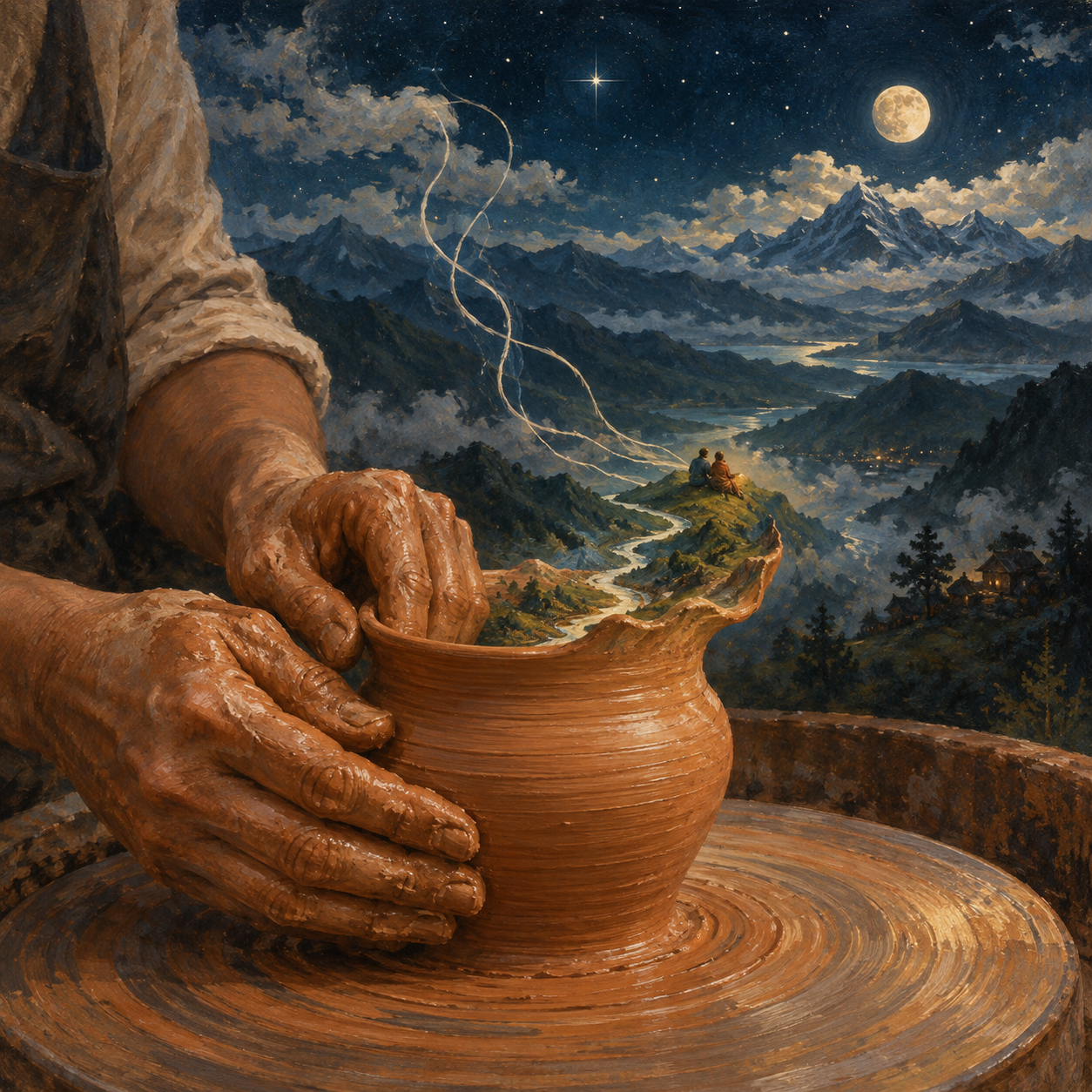
For video playback in a social feed, download the MP4 and upload it with your post. Sharing a page link does not upload its media. Autoplay and sound depend on the platform and each viewer’s settings.
Share on Instagram
Prepare your post here, then finish it in Instagram. This does not post automatically.
Save the cover image below for a photo post. To share the song itself, choose a published video version when one is available.
Copy the caption and credits, then paste them into your post.
Copy this page’s link for a Story link sticker or your profile link, where available.
For LinkedIn, use Copy caption & credits above and paste it into the sharing window.
Read
ಕನಸು ಕಾಣಲು ನನಗೆ ತಡೆಯಿಲ್ಲ,
ನಡುದಾರಿಯಲ್ಲಿ ಕಳೆದುಹೋಗಲೂ ತಡೆಯಿಲ್ಲ.
ಧ್ರುವತಾರೆ ದಾರಿ ತೋರುತ್ತದೆ.

ಒಂದೊಂದಾಗಿ... ಒಂದೊಂದಾಗಿ...
ಜಗತ್ತನ್ನು ಎದೆಗಪ್ಪಿಕೊಂಡಿದ್ದೇನೆ—
ಕೂಡಿಸುವ ಆಸೆಯಿಂದ,
ಅಂದಗೊಳಿಸುವ ಆಸೆಯಿಂದ.

ನಾನೊಬ್ಬ ಕುಂಬಾರ.

ರೂಪ ಕೊಡಲು ಕಲಿತಿದ್ದೇನೆ,
ಬಣ್ಣ ಹಚ್ಚಿ,
ನಿನ್ನ ಮೊಗದಲ್ಲಿ ನಗು ಅರಳಿಸಲು ಕಲಿತಿದ್ದೇನೆ.

ಕನಸು ಕಾಣಲು ನನಗೆ ತಡೆಯಿಲ್ಲ,
ನಡುದಾರಿಯಲ್ಲಿ ಕಳೆದುಹೋಗಲೂ ತಡೆಯಿಲ್ಲ.
ಧ್ರುವತಾರೆ ದಾರಿ ತೋರುತ್ತದೆ.

ಬಾ, ಬೆಟ್ಟ ಏರೋಣ.
ಬಾ, ಚಂದಿರನ ನೋಡೋಣ.
ಮೋಡಗಳೊಡನೆ ಹೆಗಲು ಸೇರಿಸಿ,
ಮಳೆಯಾಗಿ ಸುರಿಯುವ ಮಂತ್ರ ಕಲಿಯೋಣ.

ಕನಸು ಕಾಣಲು ನನಗೆ ತಡೆಯಿಲ್ಲ.
ನಿನ್ನ ಕನಸುಗಳನ್ನು ನನ್ನ ಕನಸುಗಳೊಂದಿಗೆ
ಹೆಣೆಯಲೂ ತಡೆಯಿಲ್ಲ.

ನಿನ್ನ ಕನಸುಗಳನ್ನು ನನ್ನ ಕನಸುಗಳೊಂದಿಗೆ...
ಹೆಣೆಯಲೂ ತಡೆಯಿಲ್ಲ.
This is an especially strong fit because the poem should remain recognisable as poetry while gaining a memorable melodic life. Musical emphasis should follow the thought, not an imposed pop accent.
The shared feeling is calm, soulful joy: affection, wonder and the freedom to dream. Local vocal phrasing and melody lead the arrangement. Rhythm and instrumentation can vary with the chosen setting while the pace remains unhurried.
Arrangement decisions and review
Status — proposed setting for the lyric draft. The reasoning on this page is a creative direction to test with a fluent singer and musician, not a verified description of a recording.
Vocal choice — solo by default. One lead keeps the poem’s first-person voice and long thoughts connected. Any second voice, shared refrain or harmony suggested in the arrangement notes is an optional variation to discuss with the author before generation; it is not required by the language.
What to validate. Shape melody around the Kannada poem's meaning; vary stanza endings subtly while keeping a recognisable refrain. Check whether the cited context supports the chosen influence and whether the musical choices serve the poem. Distinguish a documented practice from our new arrangement. Suggest corrections with the local variety, a source or performance example, and a timestamp when reviewing audio.
Cultural grounding
Sugama Sangeetha practitioners describe a close relationship between Kannada poetry, melody and clear expressive diction.
Shape melody around the Kannada poem's meaning; vary stanza endings subtly while keeping a recognisable refrain.
Warm baritone, quiet piano, lyrical violin and occasional flute. A relaxed four-beat framework can briefly loosen for long lines. Keep accompaniment sparse enough to hear word endings.
Use a warm youthful male lead. Choose the rhythm around the reviewed lyric; there is no collection-wide requirement for 6/8. Keep one answering instrument or voice prominent at a time, with percussion below the words.
Emotional shape
Give each stanza a slight melodic variation. Bring the violin forward only at the invitation to climb. Let the final weaving phrase slow naturally over a held chord. Keep a distinct gathering breath and a fuller potter pause, with soft instruments sustaining underneath. Add warmth without accelerating or building a dramatic crescendo. End in peaceful, hopeful contentment.
Style prompt
Kannada bhavageethe-inspired lyrical ballad, warm intimate male voice, clear diction and expressive poetry-led phrasing. Quiet piano, lyrical violin, occasional bamboo flute and very light hand percussion. Relaxed four-beat flow with flexible space for long lines. Separate ಒಂದೊಂದಾಗಿ... ಒಂದೊಂದಾಗಿ... and pause fully after ನಾನೊಬ್ಬ ಕುಂಬಾರ. Held notes sustain beneath the breaths. Gentle stanza-to-stanza melodic variation, a quietly memorable refrain, an expanding mountain-and-moon bridge, then a soft lingering dream-weaving ending. Understated contemporary chamber sound. Shape melody around the Kannada poem's meaning; vary stanza endings subtly while keeping a recognisable refrain. Warm youthful delivery; calm, soulful joy, affection and wonder. Keep the pace unhurried throughout; finish with peaceful hope. No mournful delivery, driving beat or dramatic crescendo.
Working settings and listening checks
Use the existing arranged lyric for comparison. Keep its words, section order and pauses intact; log any later wording changes separately.
Start with the shared generation baseline, then apply documented language or arrangement overrides. Preserve this language’s musical direction and listening checks. Explain each changed control, its musical reason and review status; record the actual settings with the take.
For the listening review:
Ask a fluent speaker to read the opening, gathering line, potter declaration and longest phrase naturally. Compare that phrasing with the sung version.
Check that the local vocal cadence and melodic treatment are audible, and that the regional character comes through beyond instrument names. Shape melody around the Kannada poem's meaning; vary stanza endings subtly while keeping a recognisable refrain.
Check the gathering breath and fuller potter pause. Listen for dropped syllables, added words, distorted pronunciation or an accompaniment that forces a sentence to hurry.
Compare the opening, bridge and ending at similar playback volume. The arrangement may grow warmer, but should remain calm, soulful and quietly happy.
Keep the current translation review status until a fluent speaker and singer have reviewed the actual wording and take.
Translation & collaboration
QUICK REFERENCE
How to validate this translation
Use this checklist alongside the review status above. A fluent review of the text and a listening review are separate steps.
Compare the meaning. Paraphrase each stanza in plain English or Odia and compare it with the source. Preserve freedom to dream and lose the way, the North Star, gathering and embracing the world, the potter, sowing a smile, mountains and moon, clouds and rain, and weaving your dreams into mine. Flag omissions, additions or changed relationships.
Read it aloud. Ask a fluent speaker of the intended dialect to check grammar, idioms, spelling, script and natural poetic phrasing. A literal word-for-word match is not the goal.
Check cultural fit. Confirm that imagery, terms of affection and musical suggestions suit the chosen region and tradition. Explain any intentional adaptation without changing the poem’s tenderness or meaning.
Check the sung version, if available. Listen against the exact lyrics for skipped or added words, pronunciation and unnatural word breaks. Keep a breath between the repeated gathering phrases and a fuller pause after “I am a potter.” Label extra repetitions as song arrangement.
Leave a review others can use. Quote the line, suggest a replacement, give its literal meaning and explain why. Include your dialect, name to credit, the version reviewed and any unresolved doubts; add timestamps only for audio you actually heard.
AI suggestions and back-translation can help find questions; neither proves accuracy. Keep drafts marked for review until a fluent speaker has checked them and the author or a designated maintainer has accepted the changes. Note exactly what was reviewed.
Preserved AI-assisted lyric draft. Have a fluent reader check idiom, grammatical agreement, natural poetic address and the dream-weaving image; then check the sung pronunciation separately.
Production baseline & local overrides
Intended settings for a future recording, not measured properties of the tracks above. Policy 2026-09-27-2.
 WORLD IS ONE